
Understanding Global Regulations for Passport Photos with Glasses
Applying for a passport or visa involves navigating a maze of requirements, and the photo specifications can often be a significant source of stress. If you wear glasses, you might be wondering if you can wear them in your passport or visa photo. The answer isn't always straightforward, as regulations vary by country and specific situations. This comprehensive guide aims to clarify these complexities, providing you with clear, up-to-date information on global regulations, acceptable styles, medical exemptions, practical DIY tips, and how AI-powered tools can help ensure your photo meets all necessary standards and avoids rejection for 2024-2025.
United States
As of November 1, 2016, the U.S. Department of State no longer permits eyeglasses in U.S. passport photos in most routine cases. The primary reason for this change was to reduce instances of glare and shadows that can obscure facial features. However, there's an exception: glasses are allowed only if you can provide a signed statement from a medical professional stating they are medically required and cannot be removed for the photo. For more information, refer to the official guidelines on the U.S. Department of State website.
Schengen Area (Europe)
The Schengen Area, encompassing 27 European countries that have abolished border controls between them, also has stringent photo requirements. Similar to the U.S., the guidelines for Schengen visa photos strongly discourage wearing glasses unless medically necessary. Medical exemptions may be granted, but documentation is required. Find more details on the European Union's official website.
Canada
Canadian passport photo requirements similarly advise against wearing glasses in most situations. The regulations emphasize that the eyes must be clearly visible, and frames should not obscure any part of the eyes. Glare and shadows are also significant concerns, making glasses generally unsuitable. Review the official guidelines from Immigration, Refugees and Citizenship Canada (IRCC).
Other Countries
Many other countries worldwide follow similar guidelines, generally discouraging or outright prohibiting glasses in passport photos to ensure clear and unobstructed facial recognition. Given the variations, always meticulously check the specific requirements of the country for which you are applying for a passport or visa. This research can save you time and prevent potential application rejections. A good starting point is the ICAO (International Civil Aviation Organization) standards for travel documents.
Acceptable vs. Unacceptable Eyeglasses: Navigating the Nuances
Even in situations where eyeglasses might be exceptionally allowed—typically with medical documentation—certain types of eyeglasses are more likely to be accepted than others. Understanding these nuances can significantly impact your photo's compliance. It's important to consider the top reasons your ID photo could be rejected.
Acceptable Eyeglasses (with Medical Justification)
- Everyday Wear: If glasses are medically required, simple, non-tinted everyday glasses are typically more acceptable. The frames should be thin and unobtrusive.
- Clear Lenses: Lenses must be completely clear and free of any tint.
Unacceptable Eyeglasses
- Tinted Lenses: Glasses with tinted lenses or sunglasses are almost universally prohibited, as they obscure the eyes and make accurate facial recognition impossible.
- Thick Frames: Thick or oversized frames are problematic because they can cover portions of the face, leading to non-compliance. Choose frames that allow full visibility of your facial features.
- Reflective Lenses: Lenses with a reflective coating are typically not allowed. This is because they can cause glare that hides the eyes, defeating the purpose of the photo.
Minimizing Reflections, Glare, and Shadows: Essential Tips
Whether glasses are exceptionally allowed (with medical justification) or typically disallowed, minimizing reflections, glare, and shadows is critically important for ensuring photo compliance. Consider the following tips:
- Clean Lenses: Before taking the photo, meticulously clean your lenses to ensure they are free of smudges, dirt, or any other imperfections that could cause distortions.
- Adjust Lighting: Use diffused, even lighting to minimize glare. Avoid harsh or direct light sources, which can create intense reflections.
- Angle Yourself: Experiment with slight adjustments to your head position to find an angle that minimizes reflections.
Obtaining Medical Exemptions: A Detailed Process
In specific cases where eyeglasses are deemed medically necessary, you may have the option to pursue a medical exemption. This process generally requires several steps:
- Consult a Medical Professional: Obtain a signed statement from a licensed medical professional (e.g., ophthalmologist or optometrist) explaining why you must wear glasses and why they cannot be removed for the photo.
- Provide Detailed Explanation: The statement should provide a comprehensive explanation of your medical condition, including the specific reasons why glasses are indispensable.
- Check Specific Requirements: Closely examine the requirements for the specific passport or visa application you are pursuing. Regulations may vary, so precision is key.
Style Guide: How to Choose the Right Frames (If Allowed)
If you're in a situation where glasses are permitted or required due to medical reasons, selecting the right frames can significantly increase your chances of photo approval.
- Frame Size and Shape: Opt for frames that are appropriately sized and don't dominate or obscure your facial features. Rectangular or oval frames that closely align with your brow line are often the safest and most reliable choices.
- Lens Coatings: While anti-reflective coatings are often recommended for daily wear, it’s best to avoid them for your passport photo. Even with these coatings, glare can still occur under specific lighting conditions.
DIY Tips for Taking Passport Photos with Glasses (If Approved)
If you are taking your passport photo at home, these do-it-yourself tips can help you maximize your chances of success, especially if glasses are medically required. Also be sure you know what to wear for a US passport photo.
- Lighting: Ensure that you are in an environment with soft, natural, and diffused lighting. Avoid direct sunlight, as it can create harsh shadows that obscure your features.
- Background: Use a plain white or off-white background to ensure that your face is the main focus of the photo and that there are no distracting elements.
- Posing: Face the camera directly with a neutral expression. Keep your head level and ensure that your eyes are open and clearly visible.
- Minimize Glare: Ensure that your lenses are impeccably clean, adjust the lighting in the room, and experiment with slight changes to your head angle to minimize any glare.
- Take Multiple Shots: Take numerous photos to increase your likelihood of capturing a compliant image. Evaluate each shot carefully to determine which best meets the requirements.
Leveraging AI-Powered Solutions for Guaranteed Compliance
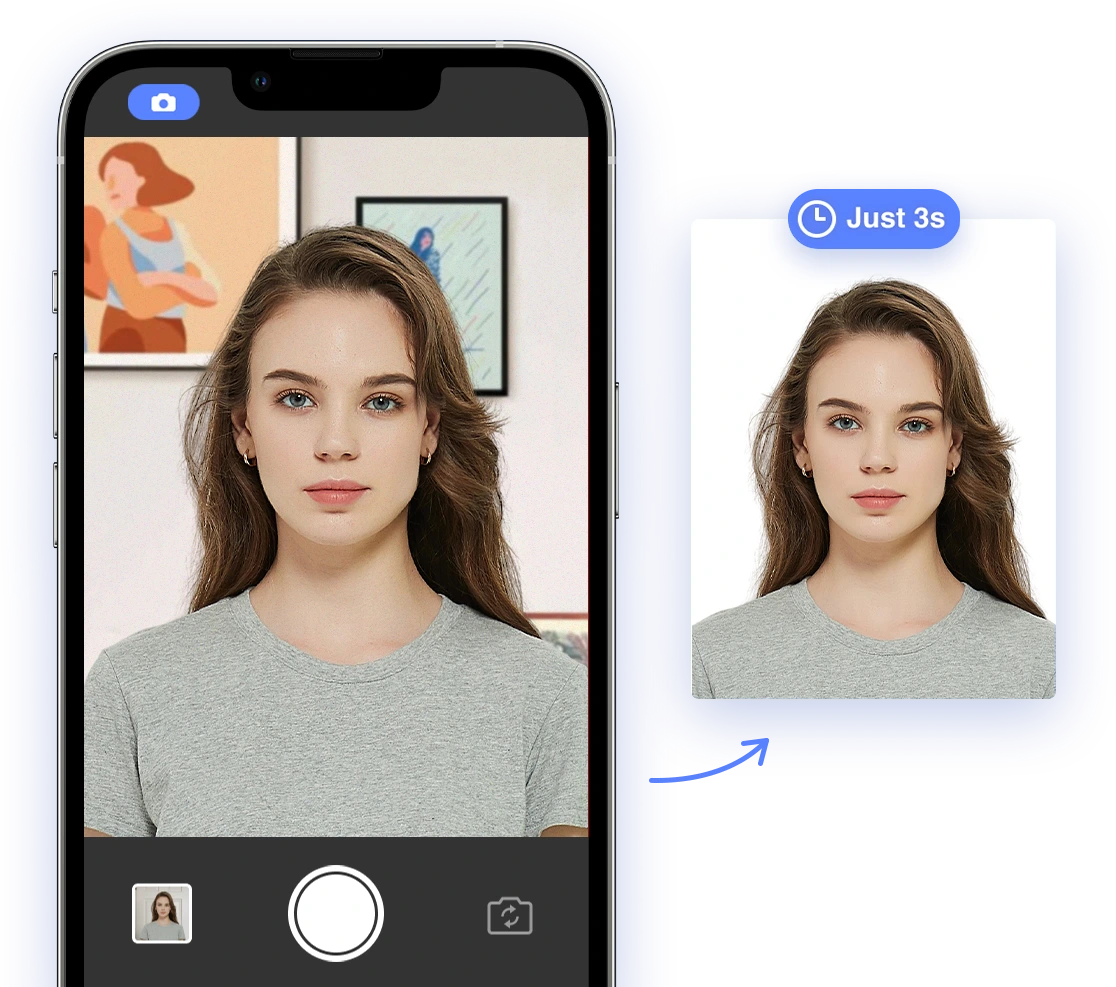
Innovative AI-powered tools, like AI Passport Photo, can significantly simplify the process of creating compliant photos with glasses. These sophisticated tools offer a range of capabilities:
- Automated Detection and Correction: They can automatically detect and correct common issues, such as reflections, shadows, and improper positioning.
- Adherence to Specific Requirements: AI Passport Photo ensures that your photos precisely meet the stringent requirements of various countries, notably increasing your likelihood of approval.
- Real-Time Feedback: The tools provide immediate feedback and guidance, allowing you to adjust your photo in real-time to meet all necessary criteria.
Troubleshooting Common Issues: Addressing Potential Problems
Even with meticulous planning, you may encounter common issues when taking passport photos, especially if glasses are involved. Here are some troubleshooting tips:
- Red-Eye: Red-eye can be a common issue when using a camera flash. Ensure that your camera's flash settings are appropriately adjusted to minimize red-eye, or opt for natural lighting instead.
- Blurry Images: To prevent blurry images, ensure that the camera is stable and that the focus is sharp. Use a tripod or stabilize the camera on a solid surface.
- Facial Recognition Issues: Make absolutely certain that your entire face is fully visible and that no elements (e.g., hair, glasses frames) obscure your facial features. The goal is to allow facial recognition systems to function accurately.
Printing and Submission: Finalizing Your Application
Once you have obtained a compliant photo, the final steps involve printing the photo or submitting it online. For printing, always use high-quality photo paper and ensure that the dimensions adhere precisely to the stipulated requirements. If submitting online, carefully follow the specific guidelines pertaining to file size, format, and resolution. Be sure to review the ultimate guide to choosing the perfect passport photo paper.
To streamline the printing process, you can efficiently use convenient services such as Walgreens 1 hour photo or Walmart One Hour Photo.
Understanding the Consequences of Non-Compliance
Submitting a non-compliant passport photo can potentially lead to significant application delays or even outright rejection. To mitigate these risks, rigorously adhere to all official guidelines and leverage tools, such as AI Passport Photo, to proactively verify your photo prior to submission.
In Conclusion: Ensuring a Smooth Application Process
While wearing glasses in a passport photo can present a set of challenges, a comprehensive understanding of the regulations, selecting appropriate styles, and utilizing available tools can significantly increase your likelihood of creating a compliant and acceptable photo. Whether you're in the process of applying for a U.S. passport, a Schengen visa, or any other essential travel document, following these well-informed guidelines will play a crucial role in helping you navigate the application process with ease and success. Prioritize the use of advanced AI tools and double-check specific requirements in order to avoid any unnecessary delays or rejections. Ultimately, meticulous compliance is the key to unlocking your global travel opportunities with confidence!