
Understanding the Official Stance on Passport Photo Retouching
Getting your passport photo just right can be a stressful part of applying for a passport or visa. You want to look your best, but you also need to ensure the photo meets strict official requirements. Retouching can seem like a great way to subtly enhance your photo, but it's essential to know what's allowed and what could cause your application to be rejected. This guide breaks down the rules on passport photo retouching, clarifies how AI tools can help, and offers practical tips for achieving a compliant and flattering photo.
The U.S. Department of State has specific guidelines for passport photos to ensure they accurately represent your current appearance. These guidelines don't explicitly forbid retouching, but they do emphasize the importance of an unaltered likeness.
The key principle is accuracy: your passport photo must accurately reflect how you look on an ordinary day. The goal is to ensure the photo provides a true and reliable representation of your identity.
Acceptable Retouching Adjustments for Passport Photos
Subtle enhancements that do not change your overall appearance are generally acceptable. These aim to improve the photo's quality without misrepresenting your identity. Permissible adjustments may include:
- Minor Blemish Removal: Removing temporary blemishes like a small pimple or a minor skin irritation is usually permissible, as long as it doesn't create a significant alteration to your face.
- Teeth Whitening: Lightly whitening teeth can be acceptable if it doesn't drastically alter your smile or create an unnatural appearance. Avoid overly bright or artificial-looking whitening.
- Slight Lighting Adjustments: Correcting minor lighting issues to ensure even illumination and reduce shadows is often allowed. This can help ensure your facial features are clearly visible.
- Red-Eye Removal: Removing red-eye caused by camera flash is generally acceptable.
Unacceptable Retouching Adjustments for Passport Photos
Any retouching that significantly alters your appearance or distorts your facial features is strictly prohibited. These alterations can lead to rejection of your passport application. Unacceptable retouching includes:
- Changing Facial Features: Altering the shape of your nose, eyes, mouth, or other distinct facial features is not allowed. This includes slimming your face, enhancing your jawline, or altering your eye shape.
- Adding Makeup: Digitally adding makeup, such as lipstick, eyeshadow, or foundation, is prohibited. The photo should reflect your natural appearance without digital enhancements.
- Removing Permanent Marks: Removing scars, moles, birthmarks, or other permanent facial features is not permitted. These features are part of your unique identity and should be visible in the photo.
- Altering Hair Color or Style: Changing your hair color, adding/removing hair, or altering your hairstyle is unacceptable. Your hair should be styled as it normally is.
- Removing Wrinkles: Removing wrinkles or other signs of aging is not allowed, as it misrepresents your current appearance.
- Using Filters: Applying filters that alter your skin tone, facial features, or overall appearance is prohibited.
How AI Can Help (and Where it Can Hinder) Your Passport Photo
AI-powered tools can be incredibly helpful for making minor adjustments, but it’s crucial to use them cautiously and with a clear understanding of the guidelines. Here's how AI can assist you, and where it can potentially lead you astray:
- AI-Powered Blemish Removal: AI can automatically detect and remove minor blemishes, saving you time and effort. However, always review the changes to ensure it doesn't remove any distinguishing marks.
- AI-Driven Lighting Correction: AI algorithms can analyze your photo and automatically adjust the lighting for optimal results, ensuring even illumination and reducing shadows. This can be particularly useful for photos taken in less-than-ideal lighting conditions.
However, it’s critically important to avoid using AI for alterations that change your fundamental appearance. AI should only be used for subtle enhancements that improve the photo's quality without misrepresenting your identity.
Balancing AI and Compliance: Tips for Responsible Use
When using AI tools, be extremely cautious about features that drastically alter your appearance. To maintain compliance:
- Review AI Changes Manually: Always manually review the AI's changes to ensure they comply with official guidelines. Don't blindly accept the AI's adjustments without careful inspection.
- Err on the Side of Caution: When in doubt, err on the side of caution and avoid any alteration that could be perceived as misrepresenting your likeness. It's better to have a slightly less flattering but compliant photo than a heavily retouched photo that gets rejected.
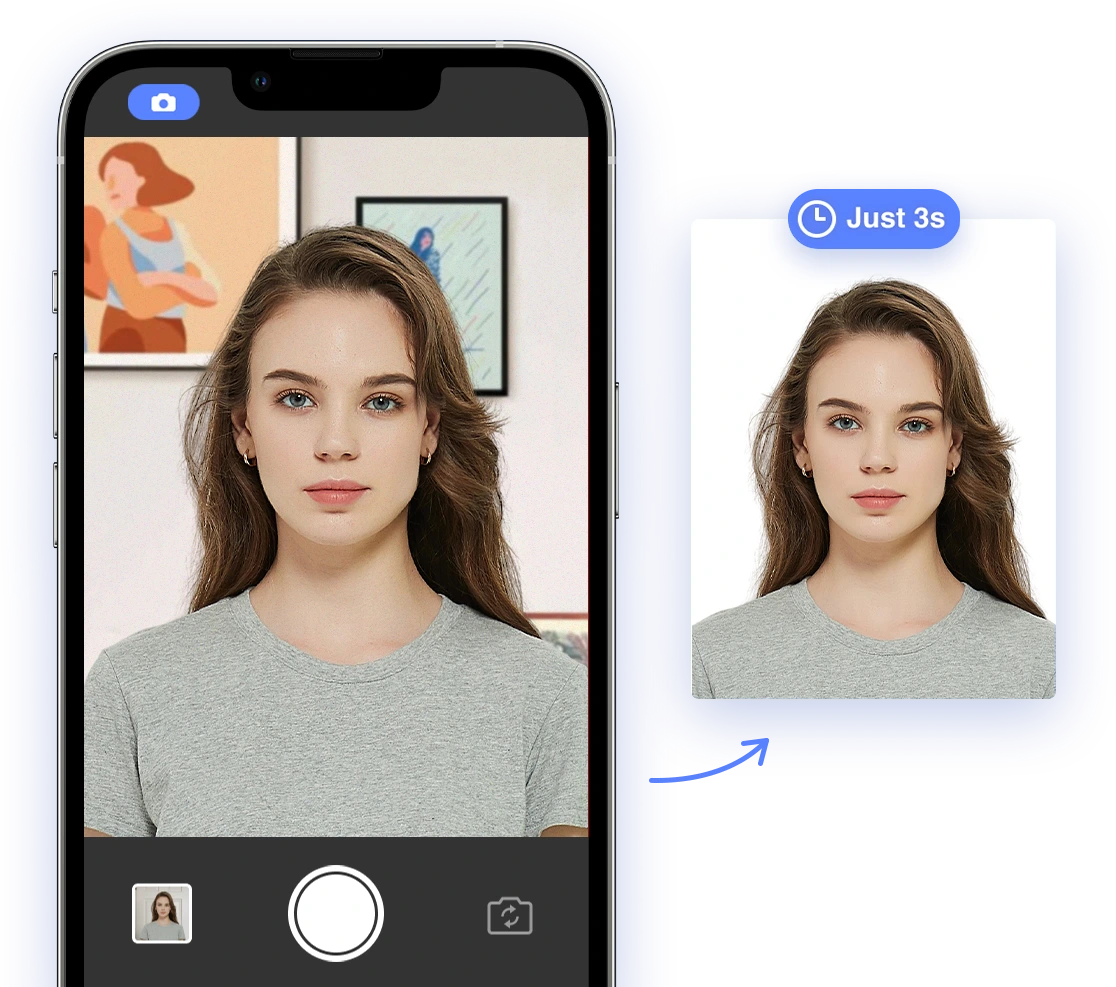
Consider using AI Passport Photo to generate a compliant passport photo. Our tool is specifically designed to ensure that your photo meets all official requirements, minimizing the risk of rejection.
Read also: Top Reasons Your ID Photo Could Be Rejected
Real-World Examples and Mistakes to Avoid in Passport Photo Retouching
To illustrate what works and what doesn't, here are a few real-world examples:
- Acceptable: A photo where a small pimple has been subtly removed, the lighting has been slightly adjusted for better clarity, and red-eye has been removed.
- Unacceptable: A photo where the applicant's nose has been digitally reshaped, heavy digital makeup has been added, or wrinkles have been completely removed.
Common mistakes to avoid include:
- Over-reliance on AI: Don't blindly trust AI tools to make all the decisions for you. Always review the results carefully and ensure they comply with the guidelines.
- Ignoring Guidelines: Make sure you thoroughly understand the official passport photo requirements before you start retouching. Ignorance of the rules is not an excuse for non-compliance.
- Submitting Low-Quality Photos: Starting with a high-quality photo is essential. Poor lighting, blurriness, or other technical issues can make it difficult to achieve a compliant result, even with retouching.
Key Takeaways for Passport Photo Retouching
Retouching your passport photo can be a way to boost your confidence, but it's important to proceed with caution and prioritize compliance with official guidelines. Stick to subtle adjustments that enhance rather than alter your appearance, and always use AI tools responsibly. By following these tips, you can ensure your passport photo is both flattering and acceptable, leading to a smooth and successful application process.
Ready to get started? Use AI Passport Photo to create your compliant and flattering passport photo today!