Common Rejection Reasons: Why Passport Photos Fail
Understanding why passport and visa photos get rejected is the first step toward creating a compliant one. Here are some of the most frequent reasons for rejection:
* **Incorrect Dimensions:** Passport photos must adhere to very strict size requirements. For US passports, the photo must be 2x2 inches (51x51 mm). Many applications are rejected because the submitted photo is the wrong size. See our guide on
Passport Photo Size in the U.S. for more info.
* **Poor Lighting:** Shadows, glare, or uneven lighting can obscure facial features and lead to rejection. The face must be evenly lit, and the photo should not be over- or underexposed.
* **Background Issues:** Most countries require a plain white or off-white background. Patterns, textures, or colors in the background will almost certainly cause a rejection. Submitting a photo with an unacceptable background is a common mistake.
* **Dress Code Violations:** Specific rules apply to clothing, accessories, and hairstyles. Head coverings are generally prohibited (with exceptions for religious or medical reasons), and eyeglasses are often discouraged. See our article about
Passport Photo Dress Code. These regulations are in place to ensure clear facial recognition.
* **Posing Problems:** Applicants must face the camera directly with a neutral expression. Smiling, tilting the head, or looking to the side can lead to rejection. Passport photos are intended for identification, and a neutral expression provides the most accurate representation.
* **Low Resolution or Poor Quality:** Blurry, pixelated, or grainy photos are unacceptable. The photo must be clear, sharp, and high-resolution to ensure accurate biometric data capture.
* **Non-Compliant Retouching:** While minor adjustments are permissible, excessive retouching that alters the applicant's appearance is prohibited. The photo should accurately reflect your current appearance.
DIY Tips & Tricks: Mastering the At-Home Passport Photo
Taking a compliant passport photo at home is entirely possible with the right knowledge and preparation. These DIY tips and tricks can help you succeed:
* **Use Natural Light:** Position yourself near a window to take advantage of soft, natural light. Avoid direct sunlight, which can create harsh shadows and overexposure.
* **Find a Plain Background:** Set up a white or off-white sheet or wall to serve as your background. Ensure the background is smooth and free of any distractions. A clean, uncluttered background is essential.
* **Enlist a Helper:** Ask a friend or family member to take the photo for you. This will help you maintain a proper pose and expression and can be especially helpful when capturing a
child's passport photo, and ensure the photo is properly framed.
* **Maintain a Neutral Expression:** Look directly at the camera with a relaxed face. Keep your mouth closed and avoid smiling, frowning, or squinting. A neutral expression ensures accurate facial recognition.
* **Dress Appropriately:** Wear everyday attire in a solid, dark color that contrasts with the background. Avoid wearing white or light colors that blend in with the background. Also, avoid busy patterns and logos. Read more about
Looking Your Best for Your U.S. Passport Photo What to Wear.
* **Remove Eyeglasses:** Unless medically necessary, remove your eyeglasses to avoid glare or reflections. If you must wear glasses, ensure they are clean and do not obstruct your eyes.
* **Check the Dimensions:** Use a ruler or measuring tool to ensure the photo meets the required size specifications. Accurate dimensions are crucial for acceptance.
* **Take Multiple Shots:** Don't settle for the first photo you take. Experiment with different angles, lighting, and expressions until you achieve the best result. More options increase your chances of finding a compliant photo.
Dress Code Decoded: What to Wear (and What Not To Wear)
The dress code for passport photos can be surprisingly strict, but understanding the guidelines can help you avoid common mistakes. Here's a breakdown of what's generally acceptable and unacceptable:
* **Acceptable Attire:**
* Everyday clothing in solid, dark colors. Choose clothing that contrasts with the background.
* Religious head coverings (if worn daily and not obscuring the face). Ensure the head covering does not cast shadows or obscure facial features. Our article
What are the requirements for hair on passport photos in the United States? may help.
* Medical devices (if necessary and not obscuring the face). Provide documentation if required.
* **Unacceptable Attire:**
* White or light-colored clothing that blends with the background. This can make it difficult to distinguish your face from the background.
* Uniforms or clothing that resembles a uniform. Civilian attire is required.
* Hats or head coverings (unless for religious or medical reasons). The face must be fully visible.
* Sunglasses or tinted eyeglasses. These obstruct the eyes and are not permitted.
* Revealing clothing. Modest attire is recommended.
* Distracting patterns or logos. Solid colors are preferred.
* **Accessories:** Jewelry should be minimal and should not obscure the face or create reflections. Avoid large or distracting pieces. To be sure, read more about
Passport Photo with Jewelry.
* **Hairstyles:** Hairstyles are acceptable as long as they don't obstruct the face. Your forehead and hairline should be visible, and your hair should not cast shadows on your face. Avoid excessive volume or styles that cover the eyes.
*Note:* Always refer to the specific requirements of the country or agency you are applying to, as regulations can vary. Check official government websites, such as the
US Department of State, for the most up-to-date information.
AI-Powered Solutions: Simplifying Compliance with Technology
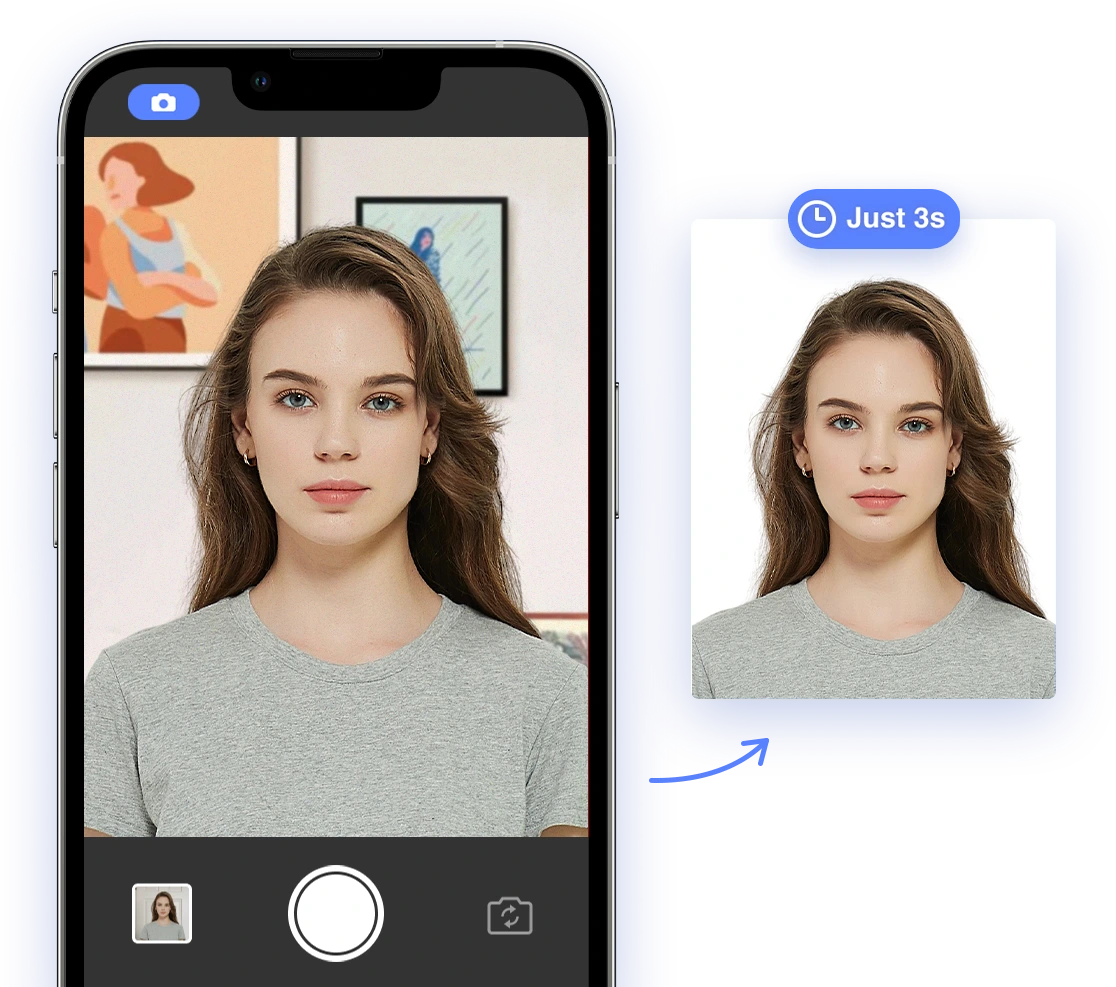
AI-powered tools, such as [AI Passport Photo](https://aipassportphoto.com/), offer a convenient and reliable way to ensure your photo meets all official requirements. These tools automatically:
* **Crop and Resize:** Precisely crop and resize your photo to the required dimensions, eliminating manual adjustments.
* **Remove Backgrounds:** Automatically remove and replace backgrounds with a plain white or off-white color, ensuring compliance with background regulations.
* **Adjust Lighting:** Optimize lighting and contrast for a balanced and well-lit photo, correcting common lighting issues.
* **Check Compliance:** Verify that your photo meets all relevant guidelines, including head size, eye position, and facial expression. This reduces the risk of human error.
* **Provide Feedback:** Offer immediate feedback and suggestions for improvement, guiding you to take a compliant photo.
By leveraging AI technology, you can minimize the risk of rejection, streamline the passport application process, and save valuable time and effort.
Global Standards & Guidelines: A Country-by-Country Overview
Passport photo requirements vary significantly across different countries, reflecting diverse cultural norms and security standards. Here's a brief overview of some key differences:
* **United States:** 2x2 inches (51x51 mm), plain white background, neutral expression, no eyeglasses. Read about
Types of U.S. Passports.
* **United Kingdom:** 45x35 mm, plain light grey or cream background, neutral expression, eyeglasses discouraged. Learn
Renew Your British Passport in the USA: A Comprehensive Guide.
* **Schengen Area:** 45x35 mm, plain light background, neutral expression, eyeglasses discouraged. Check
Get Your German Passport Photos Easily from Home.
* **Canada:** 50x70 mm, plain white background, neutral expression, eyeglasses discouraged. See
Canada Passport Photos in NYC: Everything You Need to Know.
* **Australia:** 45x35 mm, plain light grey or blue background, neutral expression, eyeglasses discouraged.
Always consult the specific requirements of the country or region you are applying to, as regulations can change frequently. You can often find this information on the embassy or consulate website. Using a tool like AI Passport Photo can also help ensure your photo conforms to the specific standards of your destination country.
Troubleshooting & FAQs: Addressing Common Issues and Concerns
Even with careful preparation and the use of AI tools, you may still encounter issues when taking your passport photo. Here are some common problems and solutions, along with frequently asked questions:
* **Problem:** Photo is too dark or too light.
* **Solution:** Adjust your lighting or try taking the photo in a different location with better natural light. Avoid harsh shadows and overexposure.
* **Problem:** Photo is blurry or pixelated.
* **Solution:** Use a higher-resolution camera or ensure your camera is properly focused. A stable surface or tripod can also help prevent blurriness.
* **Problem:** Background is not plain.
* **Solution:** Find a plain white or off-white background or use an AI tool to remove and replace the background. Ensure the background is free of any shadows or distractions.
* **Problem:** Photo is rejected due to dress code violations.
* **Solution:** Review the dress code guidelines carefully and adjust your attire accordingly. Ensure you are not wearing any prohibited items.
* **Problem:** Photo is rejected due to non-compliant retouching.
* **Solution:** Avoid excessive retouching that alters your appearance. The photo should be a true representation of your current look.
**Frequently Asked Questions:**
* **Q: Can I wear makeup in my passport photo?**
* A: Yes, but it should be natural-looking and not alter your facial features significantly. Avoid heavy makeup that could distort your appearance.
* **Q: Can I wear my hair down in my passport photo?**
* A: Yes, as long as your hair does not obscure your face or cast shadows. Ensure your forehead and hairline are visible. Check
Is it permissible to have fringe in my passport picture? - A Guide to Passport Photo Regulations.
* **Q: Do babies need to have their eyes open in passport photos?**
* A: The requirements vary by country, but for US passports, babies' eyes must be open, though some leniency is provided. Patience and persistence are key. Read more about this in
Does my 1 year old need a passport?
* **Q: What if I have a medical condition that prevents me from meeting the standard requirements?**
* A: Contact the relevant passport agency or consulate for guidance on acceptable accommodations. Provide supporting documentation from your doctor if necessary.
Actionable Checklist: Ensuring Compliance Before Submission
Before submitting your passport photo, use this actionable checklist to ensure it meets all requirements and minimize the risk of rejection:
* [ ] Photo is the correct size (2x2 inches or 51x51 mm for US passports).
* [ ] Background is plain white or off-white and free of distractions.
* [ ] Lighting is even and balanced, with no harsh shadows or glare.
* [ ] Facial expression is neutral, with eyes open and mouth closed.
* [ ] Clothing is appropriate and adheres to the dress code guidelines.
* [ ] Hairstyle does not obscure your face or cast shadows.
* [ ] If glasses are worn, they are clean and do not obstruct your eyes.
* [ ] Jewelry is minimal and does not obscure the face.
* [ ] Photo is clear, sharp, and high-resolution.
* [ ] Retouching is minimal and does not alter your appearance.
* [ ] If using AI, verify compliance across all categories.
By following this comprehensive guide and utilizing the available resources, you can confidently create compliant passport and visa photos that meet all official requirements, saving you time, money, and stress. Don't let a rejected photo derail your travel plans. Take control of the process and ensure a smooth and successful passport or visa application!
 AiPassportPhoto