# Navigating the World's Toughest Passport Photo Requirements: A Comprehensive Guide
Obtaining a passport or visa is a crucial step for international travel, but the process can often be fraught with challenges. One of the most common hurdles is ensuring your passport photo meets the stringent requirements set by various countries. A seemingly minor detail can lead to rejection, causing delays and frustration. This guide serves as your comprehensive resource, providing specific details, actionable tips, and AI-powered solutions to help you navigate even the toughest passport photo requirements and ensure a smooth application process.
## Identifying Countries with Strict Requirements
While all countries have guidelines for passport photos, some are particularly stringent. These countries often have very specific requirements regarding head size, background color, and other details. Here are a few examples:
* Germany: Known for precise biometric data and strict adherence to ICAO standards.
* Switzerland: Similar to Germany, Switzerland emphasizes accurate measurements and high-quality images.
* China: Requires specific background colors and strict rules regarding facial expressions and accessories.
* United Kingdom: Has detailed guidelines on lighting, background, and head coverings.
* Canada: Focuses on precise head dimensions and clear visibility of facial features.
It's crucial to consult the official guidelines of the specific country you're applying to, as requirements can change. Always check the latest regulations on the government's official website.
## In-Depth Analysis of Key Requirements
Several key requirements frequently cause issues for passport and visa applicants:
### Precise Head Size and Positioning
Many countries have strict rules about the size of your head in the photo and its positioning within the frame. For example, the United States requires that your head measures 1 inch to 1 3/8 inches (25-35 mm) from the chin to the top of the head.
* **Why it's important:** Accurate head size and positioning are critical for biometric identification, ensuring automated systems can correctly read and verify your facial features.
* **Tip:** Use a ruler or online tool to measure your head size before taking the photo. Ensure your face is centered and takes up the appropriate amount of space in the frame. Maintain a neutral expression to avoid distorting your measurements. Need some visual guidance? This video - How to take the ultimate passport photo - might be helpful.
### Strict Background Color and Uniformity
Most countries require a plain white or off-white background, free of shadows, lines, or textures. Any deviation from this can lead to rejection.
* **Why it's important:** A uniform background ensures that the focus remains on your face and doesn't interfere with facial recognition algorithms. Consistency in background color makes automated processing more reliable.
* **Tip:** Use a plain white sheet or wall as a backdrop. Ensure the background is evenly lit and free of shadows. Avoid wearing white clothing that might blend with the background.
### Limitations on Accessories, Jewelry, and Hairstyles
Many countries have strict rules regarding what you can wear in your passport photo. Generally, eyeglasses are not allowed, and head coverings are only permitted for religious or medical reasons, and even then, specific conditions apply. For more information on jewelry, see our detailed guide on jewelry in passport photos.
* **Why it's important:** Accessories and hairstyles can obstruct facial features and interfere with accurate identification. Regulations aim to minimize obstructions and ensure clear visibility of key facial landmarks.
* **Tip:** Remove eyeglasses and minimize jewelry. If you must wear a head covering for religious or medical reasons, ensure your full face is visible, and there are no shadows. A signed statement may be required.
### Specific Rules Regarding Eyeglasses and Head Coverings
The United States, for example, has not permitted glasses in passport photos since November 1, 2016, with very few exceptions. If you wear a head covering for religious reasons, you may need to submit a signed statement confirming this and attesting that it is a sincerely held belief.
* **Why it's important:** These regulations are in place to enhance facial recognition accuracy. Reflections from glasses and obscured facial features due to head coverings can hinder automated processing.
* **Tip:** Always check the latest guidelines, as rules can change. If you need to wear a head covering, ensure your full face is visible, and there are no shadows. Consider taking the photo without glasses unless medically required.
### Restrictions on Digital Alterations and Enhancements
Passport photos cannot be digitally altered or retouched. This means you cannot remove blemishes, change your hair color, or enhance your features.
* **Why it's important:** Digital alterations can compromise the integrity of the photo and make it difficult to accurately identify you. The photo must represent your natural appearance at the time of application.
* **Tip:** Avoid using filters or editing tools. The photo should accurately reflect your natural appearance. Ensure good lighting and grooming to present yourself well without resorting to alterations. For guidance on makeup, check out this helpful tutorial: Passport Photo Makeup Tutorial - Flawless in Every ID Pic!
## DIY Tips for Meeting Stringent Standards at Home
Taking a compliant passport photo at home is possible with careful planning and attention to detail. Here's how to maximize your chances of success:
### Setting Up the Ideal Lighting and Background
* Find a well-lit area with natural light, avoiding direct sunlight to prevent harsh shadows.
* Use a plain white or off-white sheet or wall as a backdrop. Iron or smooth out any wrinkles to ensure a uniform appearance.
* Ensure the background is evenly lit and free of shadows by using additional lighting if necessary. Consider using two softbox lights placed on either side of the subject.
### Achieving the Perfect Pose and Facial Expression
* Maintain a neutral facial expression with both eyes open and your mouth closed. Practice in front of a mirror to find a relaxed, natural expression. See teach you how to pose // I.D. pose for posing tips.
* Face the camera directly without tilting your head. Use a tripod to stabilize the camera and ensure a straight-on shot.
* Ensure your head is centered and takes up the appropriate amount of space in the frame. Use online tools or templates to verify proper head size and positioning.
### Utilizing Smartphone Camera Settings for Optimal Results
* Use the primary camera on your smartphone for better image quality. Avoid using the front-facing camera, which often has lower resolution.
* Avoid using digital zoom, as it can distort the image. Instead, move closer to the subject or crop the photo later.
* Adjust the camera settings to capture a clear, well-lit photo. Turn off HDR mode, which can sometimes create unwanted effects.
### Tips for Photographing Infants and Children
* Lay the baby on their back on a plain white or off-white sheet. Ensure the sheet is smooth and free of wrinkles.
* Ensure no one else is in the frame, and their hands aren't visible.
* It is acceptable if a baby's eyes are not entirely open, but all other children must have their eyes open. Use toys or sounds to capture their attention and encourage them to look at the camera.
## Leveraging AI for Guaranteed Compliance
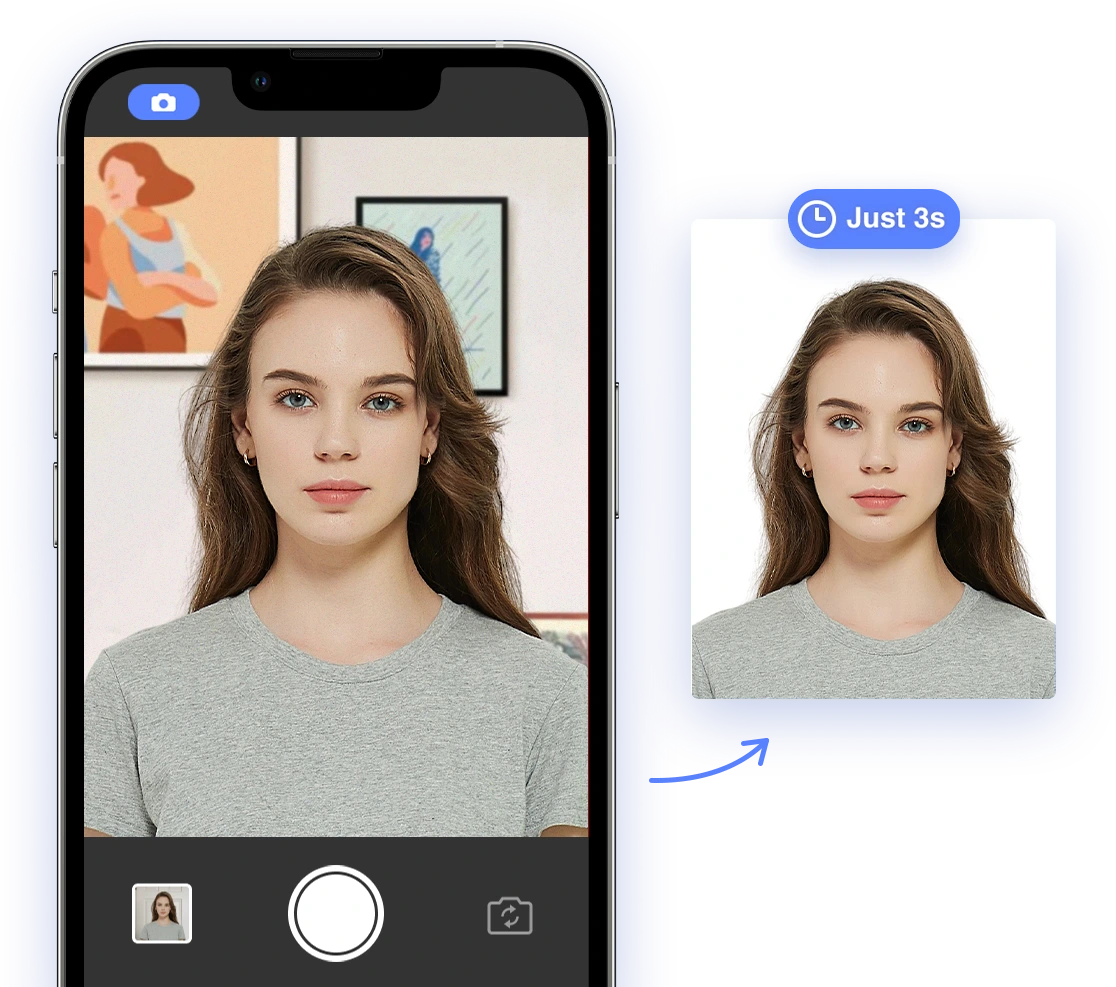
Navigating these complex requirements can be challenging, but AI-powered tools can significantly simplify the process. Services like AI Passport Photo use artificial intelligence to analyze your photo and ensure it meets all the necessary standards.
* AI-powered tools can automatically crop and resize your photo to the correct dimensions based on the specific country's requirements.
* They can also check for proper head size, background color, and facial expression, alerting you to any issues.
* These tools can even identify and correct common issues, such as shadows, uneven lighting, and red eyes. For more on what to avoid, check out 10 Passport Photo Mistakes That Will Get You Rejected (And How to Fix Them) #passportphoto.
By using AI Passport Photo, you can increase the likelihood of your photo being accepted, avoid costly rejections, and save time and effort. AI photo tools are available for both iOS and Android.
## Troubleshooting Common Rejection Reasons
Even with careful planning, passport photos can still be rejected. Here are some common reasons and how to address them:
* **Poor Photo Quality:** Ensure your photo is sharp, clear, and free of blur or pixelation. Retake the photo in better lighting conditions.
* **Incorrect Background:** Use a plain white or off-white background without shadows or textures. Ensure the background is evenly lit.
* **Non-Compliant Facial Expression:** Maintain a neutral expression with both eyes open and your mouth closed. Practice in front of a mirror to ensure a relaxed, natural expression.
* **Improper Attire:** Remove eyeglasses and minimize jewelry. If you must wear a head covering for religious or medical reasons, make sure it doesn't obscure your face.
* **Digital Alterations:** Do not digitally alter or retouch your photo. Submit the original, unedited photo.
If your photo is rejected, carefully review the rejection notice and address the specific issues identified. Then, retake your photo and resubmit it. Consider using AI Passport Photo to check your new photo before submitting it to avoid further delays.
## Country-Specific Resources and Links
For the most up-to-date and accurate information, consult the official resources of the country you are applying to:
* **United States:** U.S. Department of State Passport Photos
* **Germany:** Consult the local German embassy or a certified photo studio in Germany, as Germany has transitioned to digital passport photos as of May 1, 2025.
* **United Kingdom:** UK Passport Photo Requirements
* **Canada:** Canadian Passport Photo Specifications
By following the guidelines and tips outlined in this comprehensive guide, you can confidently navigate even the toughest passport photo requirements and ensure a smooth and successful application process. And with the help of AI Passport Photo, you can simplify the process and achieve guaranteed compliance.
Create your passport photo with AI Passport Photo now!
 AiPassportPhoto