
Understanding International Standards for Digital ID Photos
To ensure biometric compatibility and facilitate secure international travel, it's essential to understand the established standards for digital ID photos.
ICAO Standards
The International Civil Aviation Organization (ICAO) sets the baseline standards for passport photos used worldwide. These standards aim to ensure biometric compatibility and facilitate secure international travel. Key aspects include:
- Size: Typically 35x45 mm (1.38x1.77 inches)
- Resolution: Minimum 300 DPI (dots per inch)
- Head Size: The distance from the bottom of the chin to the crown of the head should be within a specific range (e.g., 31-36 mm)
- Background: Plain white or off-white
These standards are a starting point, but individual countries often add their own specific requirements, making a globally compliant photo a challenge.
Country-Specific Requirements
While ICAO provides a general framework, many countries have unique stipulations. For example:
- United States: Requires a 2x2 inch (51x51 mm) photo with a white background. Eyeglasses are generally not allowed unless medically necessary with proper documentation. See more about passport photos with glasses.
- United Kingdom: Specifies a head height of 29-34 mm and mandates that the applicant's expression be neutral with the mouth closed.
- Schengen Area: Adheres closely to ICAO standards but has stringent rules regarding lighting, focus, and background uniformity. Check out information on a photo for Schengen visa.
It’s crucial to consult the official guidelines of the specific country for which you're applying. Check the embassy or consulate website for the most up-to-date information. The ICAO website is also a valuable resource to start. Understanding these nuances is the first step toward a successful application.
Common Mistakes to Avoid
Even with clear guidelines, mistakes happen. Recognizing these common pitfalls can save time and prevent frustrating rejections. Here are some common mistakes to watch out for:
- Incorrect Size or Format: Failing to meet the exact dimensions or file size requirements specified by the issuing authority.
- Poor Lighting: Shadows, overexposure, or uneven lighting that obscures facial features.
- Unacceptable Background: Using a colored, patterned, or cluttered background instead of the required plain white or off-white.
- Non-Neutral Expression: Smiling, frowning, or raising eyebrows, as most countries require a neutral facial expression. See Is it okay to smile in a passport photo?
- Wearing Glasses or Headwear: Unless medically or religiously required and properly documented, these are often prohibited. Also consider if Hats in Passport Photos are appropriate for you.
- Low Resolution: Submitting a low-resolution image that appears blurry, pixelated, or lacks sufficient detail for biometric analysis.
Avoiding these mistakes is key to a smooth application process. Read on to learn DIY tips for a compliant photo.
DIY Tips for Compliant Digital ID Photos
Taking your own digital ID photo can save time and money, but it requires attention to detail. Follow these tips for a higher chance of success. If you take the DIY route, remember preparation is key:
- Use a High-Quality Camera: A smartphone with a good camera (12MP or higher) is usually sufficient. Ensure the lens is clean and free of smudges.
- Find a Well-Lit Area: Natural light is best, but avoid direct sunlight, which can cause harsh shadows. If using artificial light, ensure it’s diffused and even. Two softbox lights positioned at 45-degree angles work well.
- Use a Plain White Background: A white wall or a white sheet hung behind you works well. Make sure it’s smooth, wrinkle-free, and evenly lit.
- Dress Appropriately: Wear plain, neutral-colored clothing. Avoid patterns, logos, or anything too flashy. Check specific country requirements, but in general, avoid white tops as they can blend into the background. Make sure to learn about Passport Photo Dress Code.
- Maintain a Neutral Expression: Look directly at the camera with a neutral expression. Keep your mouth closed and relax your facial muscles. Practice in a mirror beforehand.
- Position Yourself Correctly: Keep your head straight and centered in the frame. Ensure your face is fully visible, with no hair obscuring your features. A tripod can help maintain a consistent distance and angle.
- Take Multiple Shots: Experiment with different angles and lighting to find the best result. Review the photos carefully on a larger screen to check for any issues.
For guaranteed compliance, consider using AI tools. They offer significant benefits over manual methods.
How AI Passport Photo Simplifies Compliance
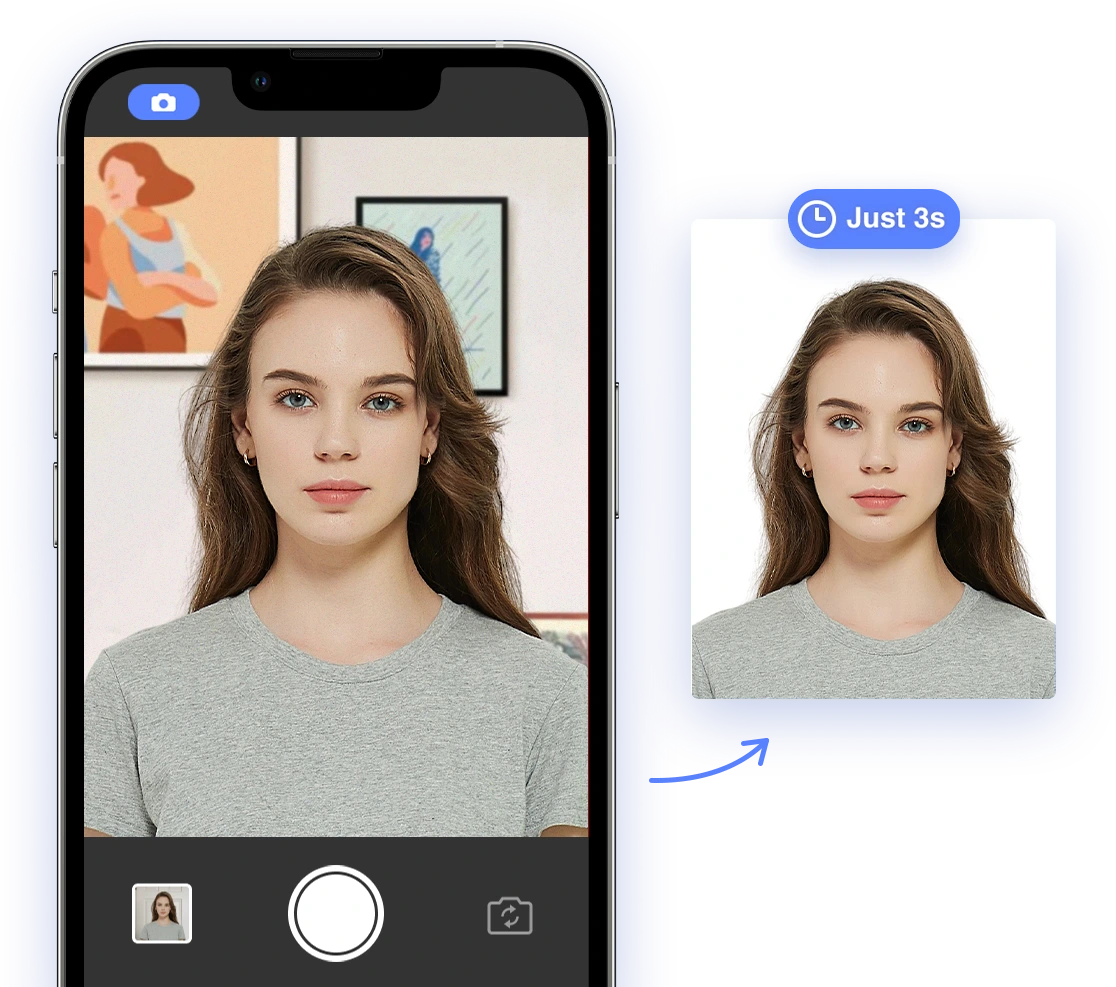
AI Passport Photo is designed to streamline the process of creating compliant ID photos, saving you time and minimizing the risk of rejection. Here’s how it works:
- AI-Powered Analysis: The tool uses advanced AI algorithms to analyze your photo, automatically checking for compliance with specific country requirements.
- Automatic Adjustments: It automatically crops, resizes, and adjusts the background to meet the necessary standards, eliminating manual adjustments.
- Real-Time Feedback: The tool provides instant feedback on aspects like head position, facial expression, lighting, and background uniformity, guiding you to take the perfect shot.
- Guaranteed Compliance: Offers a guarantee that your photo will be accepted by the relevant authorities, or you'll receive a refund, providing peace of mind.
Ready to simplify your photo ID process? Give AI Passport Photo a try today!
Government-Issued Digital IDs: The Future of Identification
Many governments are moving towards digital IDs, offering citizens a secure and convenient way to prove their identity online and offline. These digital IDs often rely on compliant digital ID photos for verification, making adherence to standards increasingly vital.
- Estonia: A pioneer in digital identity, Estonia offers e-Residency, allowing individuals to access Estonian services and conduct business remotely using digital authentication.
- India: Aadhaar is a biometric ID system that covers over a billion residents, used for everything from banking and government services to verifying identity for SIM cards and other essential services.
- European Union: The EU is actively developing a digital identity framework that would allow citizens to securely access services across member states, promoting seamless cross-border transactions and interactions.
As digital IDs become more prevalent, understanding and meeting the requirements for compliant digital ID photos will become even more critical for accessing essential services and participating in the digital economy. This evolution underscores the need for reliable and accessible tools for ensuring photo compliance.
Troubleshooting Common Issues with Digital Photo Submissions
Even with the best tools and tips, you might encounter issues when submitting your digital ID photo. Knowing how to troubleshoot these problems can save you time and frustration. Here are some common issues and how to solve them:
- File Size Too Large: Use an online image compressor to reduce the file size without sacrificing quality. Ensure the compression doesn't introduce artifacts or blurriness.
- Incorrect File Format: Ensure your photo is in the required format (usually JPEG or PNG). Use an image converter if needed, and double-check that the color profile is sRGB.
- Website Errors: Clear your browser cache and cookies, or try using a different browser. Temporarily disable browser extensions that might interfere with the upload process.
- Photo Not Accepted: Carefully review the specific requirements again and use an AI-powered tool like AI Passport Photo to identify and fix any issues. Contact the issuing authority for clarification if needed.
Facing issues? Don't give up! AI Passport Photo is here to help you.
By understanding international standards, avoiding common mistakes, leveraging AI-powered solutions, and knowing how to troubleshoot common issues, you can confidently navigate the world of digital ID photos and ensure a smooth application process. If you're applying for a US passport, make sure to check 'the official US Department of State website' for the latest requirements.