
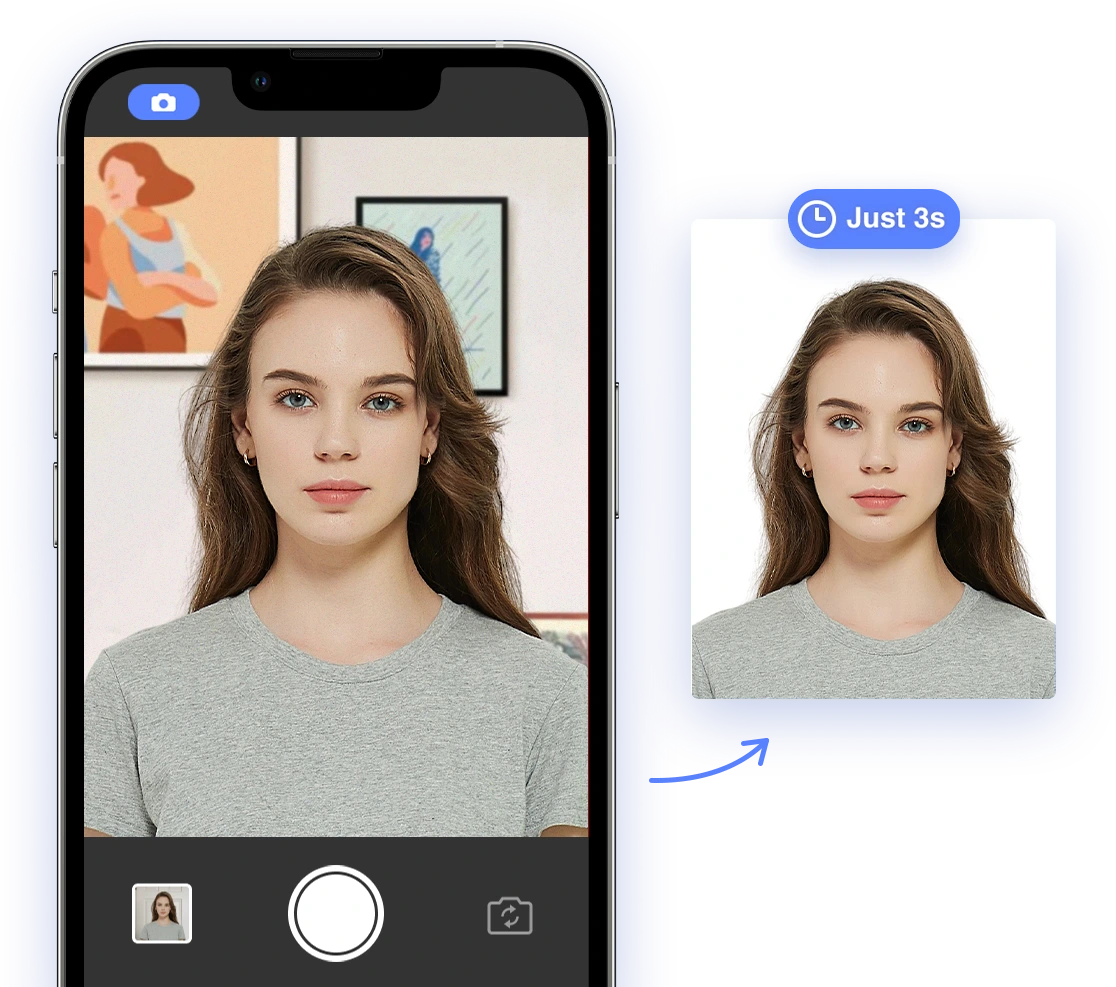
Are you planning a trip abroad in 2026? Or do you simply need to renew your passport or other identification documents? One crucial step in the application process is providing a compliant photo. But navigating the complex and ever-evolving world of biometric photo standards can be a headache. Thankfully, artificial intelligence (AI) is stepping in to revolutionize the process, making it easier than ever to achieve compliance and enhance security. Let's explore how AI is changing the game when it comes to biometric passport photos.
Understanding Biometric Passport Photo Standards
Biometric passport photos utilize sophisticated technology to enhance security and verify identity. These photos adhere to strict standards set by organizations like the International Civil Aviation Organization (ICAO) and individual governments. Key requirements typically include:
- Dimensions: The most widely used ICAO-compliant format is 35 x 45 mm. The face height should cover approximately 70–80% of the image (around 32–36 mm). While the ICAO standard is 35x45 mm, the United States requires a 2x2 inch photo.
- Face Size: The face should take up 70-85% of the photograph, measured from the bottom of the chin to the top of the head.
- Resolution: The image's recommended resolution is 300 pixels per inch (dpi).
- Background: A plain, uniform, and light-colored (white or off-white) background is generally required. It should be free of patterns, shadows, objects, or other people. You can also read more about passport photo background rules on our site.
- Lighting: The lighting must be uniform, with no shadows on the face or behind. There should be appropriate brightness and contrast, showing natural skin tones. Avoid red-eye effect or other image defects.
- Facial Expression: A neutral expression with both eyes open and mouth closed is mandatory. The expression on the face should look natural.
- Head Position: The head should be centered and not tilted. Full head from top of hair to bottom of chin should be visible.
- Focus: The face should be in sharp focus and clear. The photo should not be blurred.
- Eyewear: If glasses are worn, the eyes must be clearly visible, without flash reflections on the lenses. Glasses should not be sunglasses (non-tinted lenses). Avoid heavy frames or frames covering any part of the eyes.
- Head Coverings: Head coverings are not permitted except for religious reasons. In such cases, the facial features from the bottom of the chin to the top of the forehead and both edges of the face must be clearly shown. Further information can be found in our article about requirements for hair on passport photos.
- No alterations: Photos should be unaltered by computer software. There should be no ink marks, creases, or lines.
- Recent: The photo must be recent (no more than 6 months old).
Adhering to these standards ensures that your passport photo can be accurately processed and used for biometric identification.
DIY vs. Professional Biometric Photos in 2026
In 2026, you have more choices than ever on where to obtain compliant biometric photos:
Taking Biometric Photos at Home with AI-Powered Apps
If you choose to create your passport photo at home, consider these points. Also, check out this video for more information: Taking A Passport Photo At Home.
Pros:
- Cost-Effective: Significantly cheaper than professional photo services.
- Convenient: Take photos from the comfort of your home, at any time.
- Control: You have complete control over the photo-taking process.
- AI Assistance: AI tools provide real-time feedback and ensure compliance.
Cons:
- Requires Smartphone or Camera: You'll need a device with a decent camera.
- Potential for Technical Issues: Lighting and background setup can be challenging.
- Reliance on AI Accuracy: AI is not always perfect and may require some manual adjustments.
Using Professional Photo Services
Pros:
- Expertise: Professionals are familiar with passport photo requirements.
- Guaranteed Compliance: Many services guarantee acceptance or offer a free retake.
- Convenience (for some): No need to worry about technical aspects.
Cons:
- More Expensive: Typically costs more than DIY options.
- Less Convenient: Requires travel and scheduling an appointment.
- Less Control: You may not be completely satisfied with the final result.
The Role of AI in Ensuring Compliance
AI algorithms are revolutionizing passport photo compliance by automating the verification process. These tools can analyze various aspects of a photo, including:
- Facial Visibility and Alignment: Ensuring the face is clearly visible and correctly aligned within the frame.
- Background Color and Uniformity: Verifying that the background is plain and meets specific color requirements.
- Lighting and Shadows: Detecting and correcting issues with lighting and shadows on the face.
- Expression and Head Position: Confirming a neutral expression and proper head orientation.
By automatically detecting and correcting these issues, AI significantly increases the likelihood of photo acceptance. These tools can also be used to create photos for Green Cards.
AI Passport Photo: A Step-by-Step Guide
Ready to create your compliant biometric photo with AI? Here's how:
- Download the AI Passport Photo App: Get it on the App Store or Google Play.
- Upload Your Photo: Select a photo from your phone's gallery or take a new one using the app.
- Let AI Analyze Your Photo: The AI will automatically check for compliance with passport photo requirements.
- Make Necessary Adjustments: If the AI detects any issues, follow the app's guidance to make corrections.
- Download and Print: Once your photo meets all requirements, download it in the correct format for printing or online submission.
Troubleshooting Common Rejection Issues
Even with AI assistance, passport photos can sometimes be rejected. Here's what to do:
- Uneven Lighting: Retake the photo in a well-lit room, avoiding direct sunlight.
- Shadows: Ensure there are no shadows on your face or background.
- Red Eye: Use the AI Passport Photo app's red-eye removal tool.
- Incorrect Background: Use the AI background removal tool to replace the background with a plain white one.
- Non-Neutral Expression: Retake the photo with a relaxed, neutral expression.
If you have ongoing issues, consider using a service that offers expert human review to ensure compliance. Also, read our article about what to do if your passport photo is rejected.
The Future of Biometric Identification
Biometric technology is poised to play an even greater role in travel and security in the years to come. We can expect to see:
- Enhanced Security Measures: More sophisticated biometric techniques to prevent fraud and identity theft.
- Streamlined Travel Processes: Faster and more efficient airport security and border control procedures. Also, read our article about places you can travel without a passport.
- Integration with Digital IDs: Seamless integration of biometric data with digital identification documents.
AI will be at the forefront of these advancements, ensuring that biometric identification remains accurate, secure, and user-friendly. Also, with the increasing reliance on Virtual Private Server hosting for governments, expect increased digital infrastructure and security for managing and processing photos.
AI and Digital Travel Documents
The rise of digital travel documents, such as digital passports and visas, is another exciting development. AI can play a crucial role in verifying photos and documentation in real-time, enhancing both efficiency and fraud prevention. Imagine a future where you can breeze through airport security simply by showing your digital passport on your smartphone, with AI instantly verifying your identity and ensuring you meet all requirements. You can also learn more about digital travel and MyTravelGov Accounts.
Ready to experience the future of passport photos? Download the AI Passport Photo app today and simplify your next application!