
Understanding Core Passport Photo Requirements in 2026
To ensure your passport photo is accepted, it's crucial to understand the basic requirements that will be enforced in 2026. Expect stricter standards driven by facial recognition software. Here's what you need to know:
- Photo Basics:
- Must be in color.
- Taken within the last 6 months to reflect your current appearance.
- A high-resolution image that is sharp, clear, and free of pixelation or blur.
- Size and Format:
- In the United States, the photo size should be 2 x 2 inches (51 x 51 mm). In most European countries, the size is 35 x 45 mm.
- File format should be JPG, PNG, HEIC, or HEIF.
- The file size should be between 54 kilobytes and 10 megabytes.
- Background:
- Taken in front of a plain white or off-white background.
- The background should have no shadows, texture, lines, or objects.
For guidance on achieving the perfect background, see Passport Photo Background: The Ultimate Guide.
- Appearance:
- Wear everyday clothes. Do not wear uniforms, except for religious clothing worn daily.
- Avoid white tops.
- No hats or head coverings unless worn daily for religious reasons. Your full face must be visible, and the head covering must not cast shadows on your face.
For more information on head coverings, see Hats in Passport Photos: US Rules & AI Solutions.
- Your face should take up approximately 70-80% of the image. The head should measure between 1 inch and 1 3/8 inches (22 mm and 35 mm) from the bottom of the chin to the top of the head.
- Face the camera directly with a neutral expression and both eyes open.
- Your face must be fully visible; hair should not cover your eyes.
For insights on hairstyles, see What are the requirements for hair on passport photos in the United States?
- Eyeglasses are generally not allowed, unless they cannot be removed for medical reasons. In such cases, a medical statement is required, and the frames must not cover the eyes or cause glare/shadows.
For guidance on wearing glasses, see Passport Photo with Glasses: A Global Guide to Compliance, Style, and AI Solutions [2024-2025].
- Lighting:
- Face the light to ensure even lighting.
- There should be no shadows or glare on the face.
- Digital Alterations:
- Do not use filters or retouching tools.
To understand what alterations are permitted check Passport Photo Retouching: What's Allowed & How AI Can Help [2024-2025].
Remember that because facial recognition software is used to analyze your photo for biometric compliance, strict adherence to these specifications is now needed. If your photos don't meet the standard requirements, the application will be rejected and there will be delays to the submission. Consider using professional services, like AI Passport Photo, to ensure compliance with these standards. See "10 Passport Photo Mistakes That Will Get You Rejected (And How to Fix Them) #passportphoto" for a visual guide on avoiding common errors.
DIY Passport Photos: Leveraging AI for Guaranteed Compliance
Taking passport photos at home can save you time and money, especially with the help of AI. Here’s how to leverage AI for guaranteed compliance: Are you an expat? Learn the specific rules for your passport photo with Global ID Photo Guide [2024-2025]: Stress-Free Passport, Visa & National ID Applications
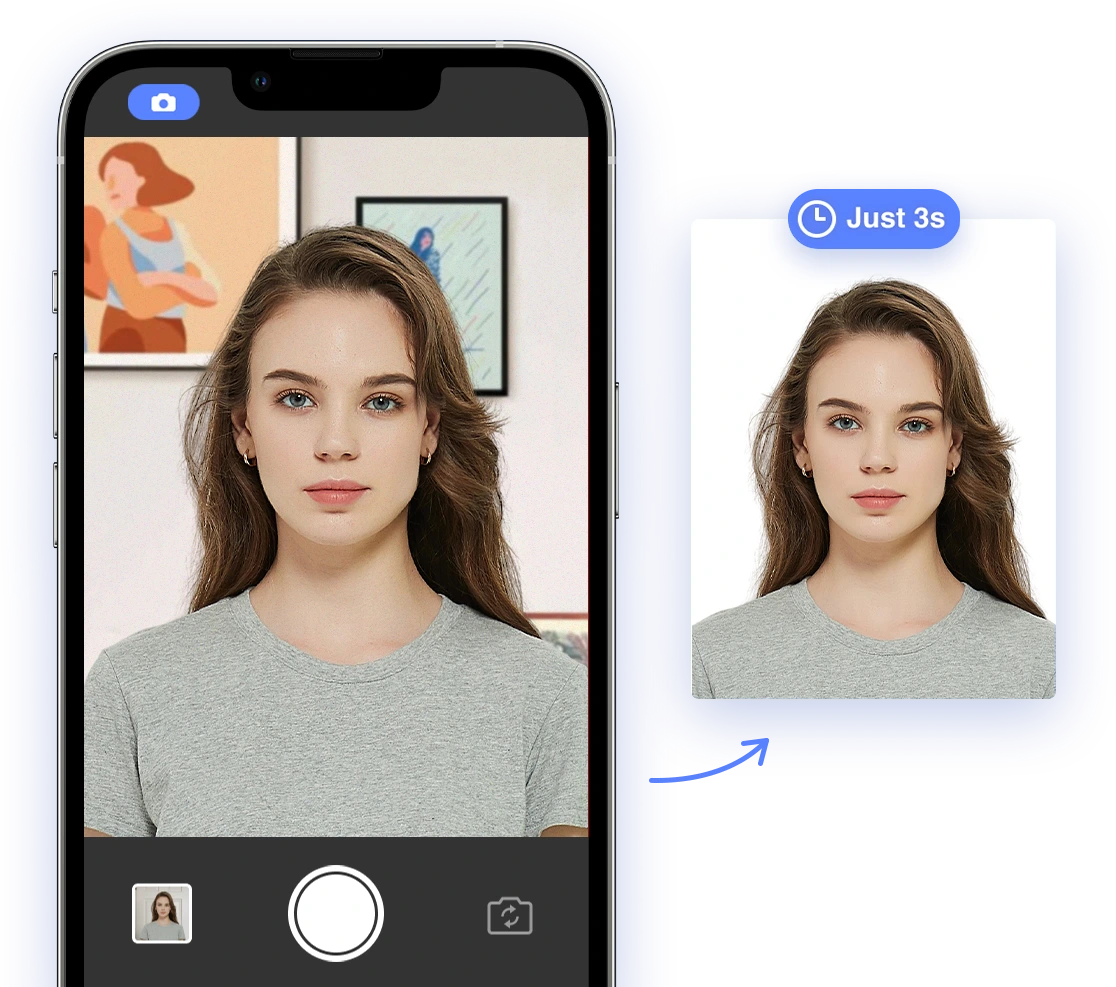
- Use a Smartphone Camera: Modern smartphones have high-quality cameras that can capture excellent photos. Check out the best tips for capturing a great passport photo using your iPhone in just 3 minutes: Tips for Capturing a Great Passport Photo Using Your iPhone in Just 3 Minutes.
- Choose an AI-Powered App: Select a reputable AI passport photo app like AI Passport Photo. These apps can automatically:
- Crop and resize the photo to the correct dimensions.
- Remove or replace backgrounds with a plain white one.
- Ensure proper head size and position.
- Check for compliance with all official requirements.
- Follow Lighting Guidelines: Ensure even lighting to avoid shadows. Natural light is best, but avoid direct sunlight. Position yourself near a window or use soft, diffused lighting.
- Maintain a Neutral Expression: Keep a neutral facial expression with both eyes open and looking directly at the camera. No smiling, frowning, or squinting. Check out "HOW TO LOOK GOOD IN PASSPORT/ID PICTURES" for tips on posing.
By following these tips and using an AI-powered app, you can create a compliant passport photo at home.
Addressing Tricky Situations with AI
Certain situations can make taking passport photos more challenging. Fortunately, AI can assist with:
- Eyeglasses: While generally not allowed, AI can help detect and remove glare or reflections on glasses, or even digitally remove the glasses altogether (though this should only be done if medically permissible).
- Head Coverings: If you wear a head covering for religious or medical reasons, AI can ensure that your face is fully visible and that the head covering doesn't cast shadows.
- Beards: AI can help ensure that your beard doesn't obscure any facial features required for identification.
- Makeup: While makeup is allowed, it should be natural-looking and not alter your appearance significantly. AI can help detect if makeup is too heavy or alters facial features.
What about Green Card Holders?
Green Card holders also need to provide passport-style photos that meet specific USCIS requirements. These requirements include:
- Size: 2x2 inches (51x51 mm).
- Format: Color photo printed on high-quality matte or glossy photo paper.
- Background: Plain white or off-white.
- Expression: Neutral with both eyes open.
- Head Position: Centered within the frame.
AI-powered tools can greatly simplify this process, ensuring your green card photo meets all necessary standards. Read: Green Card Photo: Requirements, Sizes & AI Solutions for 2024-2025 for all the information.
Avoiding Common Rejection Reasons with AI Assistance
Many passport photo applications are rejected due to common mistakes. AI tools can help you avoid these pitfalls:
- Incorrect Size and Cropping: AI apps automatically crop and resize your photo to the exact dimensions required.
- Poor Lighting: AI can analyze lighting and suggest adjustments to eliminate shadows or glare.
- Non-Compliant Background: AI can automatically remove and replace backgrounds with a plain white one.
- Incorrect Head Position: AI can detect head tilt and provide guidance on proper positioning.
Check out "Why my passport photo was rejected: Exposure" for visual examples of lighting issues. AI-powered tools help to ensure your image fulfills each specific criteria and increases the likeliness of your acceptance.
Digital Photo Analyzers: Ensuring Compliance Before Submission
Before submitting your passport photo, use a digital photo analyzer to verify compliance. These AI-powered tools can automatically check your photo against official requirements and provide feedback on any issues.
By using a photo analyzer, you can identify and correct any problems before submitting your application, saving time and avoiding potential delays. AI Passport Photo has a built in tool to assist the users before final submission. For more information about what to do after your photo is rejected, see What if my passport photo is rejected?
The Future of Passport Photos: Emerging AI Trends and Biometric Verification
For a light-hearted take, check out this video: "Passport pictures slayed ngl"
The future of passport photos is intertwined with advancements in AI and biometric verification. In 2026, expect to see:
- Enhanced Facial Recognition: More sophisticated facial recognition systems that can accurately identify individuals even with minor changes in appearance.
- AI-Powered Compliance Checks: Automated systems that can instantly verify photo compliance with greater accuracy and efficiency.
- Digital IDs: The rise of digital IDs stored on smartphones or other devices, eliminating the need for physical passport photos.
As AI technology continues to evolve, expect the passport photo process to become even more streamlined, secure, and user-friendly. Take control of the change and use AI Passport Photo today!